
Battle of Monocacy • Tour the Battlefield • Monuments & Markers • The Armies
On July 9, 1864 Confederate Lieutenant General Jubal Early led 15,000 Confederate troops on the turnpike southeast from Frederick, Maryland, mostly tough veterans of the Army of Northern Virginia. Union Major General Lew Wallace had scraped together around 3,200 inexperienced garrison troops from his rear area command around Baltimore and prepared to defend the crossings of the Monocacy River just outside Frederick. He was joined at the last minute by 3,300 veterans from Brigadier General James B. Ricketts’ Division of the Army of the Potomac’s Sixth Corps who had been rushed north from Petersburg. The stakes were an almost undefended Washington D.C.

Background to the Battle
In July of 1864 the Confederacy was fighting for its life. Overwhelming Union forces under General Grant were sealing off Confederate General Robert E. Lee’s Army of Northern Virginia in siege lines surrounding Richmond and Petersburg. In a desperate gamble, Lee detached Lieutenant General Jubal Early with his Second Corps to link up with Major General John C. Breckenridge’s small command in the Shenendoah Valley. The combined force of 15,000 men was ordered to draw off as many Union troops as possible from Richmond by moving down the Valley and threatening Union garrisons and supply lines along the Potomac, possibly even threatening Washington D.C.
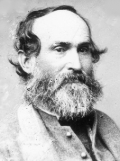
Confederate Lieutenant General Jubal Early
Washington had seen a number of Confederate threats in northern Virginia. For two years they had never broken through the capital’s strong defenses and large garrison. But by July of 1864 most of the troops that had manned the city’s fortifications had been sent south to Richmond to replace the massive casualties that Grant had suffered. Still, the high command was confident there were enough defenders to deal with partisan cavalry raids. Plus, Grant could quickly use water transportation to send help up from Petersburg if it was needed.
But Early’s advance was no partisan raid. He had tough, veteran infantry backed up by artillery. And these were “Stonewall” Jackson’s old command, so famous for their fast marching they they were called “foot cavalry.” Early moved faster and with a much larger force than the Union high command anticipated. And now Washington was waking up to the fact that Early was two days march from Washington, whose defences were virtually unmanned, and the troops that Grant had waited until the last minute to send might be too late. Now it was Washington in peril.
The Union Buys Time
Union General Lew Wallace was the Commander of the Middle Military District headquartered in Baltimore. He had been a brigade commander under Grant at the Battle of Shiloh, where he inadvertently marched down the wrong road, took his men out of the fight for several critical hours, and earned a permanent place on Grant’s black list. His punishment was to be banished to rear area commands.
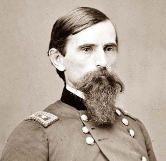
Union Major General Lew Wallace
Wallace now saw a chance to redeem himself. He scraped together 3,200 militia and garrison troops and moved them by train to the eastern bank of the Monocacy River just outside Frederick. Here bridges crossed the river, with a road and railroad heading to Baltimore and a turnpike to Washington. The river could be forded by cavalry and infantry, but bridges would have to be captured if Early’s artillery and supply wagons were to cross.
At the last minute Wallace was saved from a complete debacle when 3,300 combat veterans from the Army of the Potomac arrived. They were the first of the troops that Grant had sent from Petersburg. Wallace was still outnumbered more than 2-1. But now he had a chance.
What happened at the Battle of Monocacy?
The fighting started around 8:30 am when Confederate skirmishers moving down the turnpike to Washington ran into Union troops posted on the west side of the river crossings. The Confederates were stalled, and skirmishing continued most of the morning north of the river. Early countered by sending McCausland’s brigade of cavalry to ford the river a mile downstream.
That forced Wallace to shift troops to defend his left flank against the new threat. At the same time – about 10:30 – he burned the covered Turnpike bridge over the Monocacy, leaving a number of men trapped on the other side to try to cross as best as they could.
McCausland’s cavalry attacked about 11:00 against Wallace’s left flank but were thrown back by the Union Sixth Corps veterans. He launched another attack around 2:00, this time successful, but was thrown back by a violent Union counterattack.
By this time Gordon’s Confederate infantry division had crossed at the same ford McCausland had used and was coming up from behind. Gordon launched his attack about 3:30. The fighting between the veteran infantry of both sides was heavy, but slowly superior Confederate numbers pushed ahead. The Union left flank began to fall back. Confederates now began pushing back Wallace’s right flank as well, eventually outflanking the position. Wallace had no choice to save his men but to retreat. By 5:00 Union troops were in full flight towards Barltimore.
After the Battle
Early had won at Monocacy, but his men had taken casualties and exhausted themselves fighting in the hot and humid weather. Their advanced parties arrived the next day at the fortifications of Washington, too late in the day to do anything more than skirmish outside the earthworks of Fort Stevens – and come within a yard of shooting Abraham Lincoln. That night reinforcements from Grant arrived, and the next day Early chose to withdraw after testing the strength and steadiness of Grant’s veterans. Washington was saved.
Even without capturing Washington Early had succeeded in his mission. A full Union army corps had been withdrawn from the Petersburg front, more were on their way, and Richmond would survive another nine months.
But in August in the Thomas house on the Monocacy battlefield, Grant would set down with a brash and aggressive general named Philip Sheridan to plan what would lead to the total destruction of Early’s army.
Preserving the Battlefield
For many years there was little recognition of the battle on the Monocacy battlefield. A Monocacy Monument Association was established in 1889 to erect a monument, but although money was raised no monument was.
The first monument was placed in 1907, that of the 14th New Jersey Infantry Regiment. (see Monuments and Markers). Then the battlefield sank into annonymity. The Washington Turnpike was shifted from what is now Araby Church Road to its present route. Bushes and weeds obscured the Vermont and Pennsylvania monuments. The 75th anniversary of the battle saw little more than an article in the Frederick newspaper.
In 1934 Monocacy National Park was created, but no land was set aside. On the centennial of the battle in 1964 Maryland dedicated a small monument. In 1978 the park’s name was changed to Monocacy National Battlefield and the Federal Government was authorized to purchase land for the park. Significant additions to the park were made in the 1990s and a Visitor Center was developed in Gambrill’s Mill.
On June 27, 2007 a new Visitor Center was built on the northern edge of the battlefield along the Urbana Pike.
Battle of Monocacy Facts
Where was the Battle of Monocacy?
The battle was fought two to three miles south and east of the city of Frederick, Maryland, along the banks of the Monocacy River. The river was difficult to cross and played a critical role in the battle as a defensive line for Union troops.
When was the Battle of Monocacy?
The battle was fought on July 9, 1864 and lasted all day. It was part of Confederate General Jubal Early’s Valley Campaign. See the Timeline of Early’s Invasion of the North in 1864
Why was the Battle of Monocacy fought?
In June of 1864 Confederate General Robert E. Lee had been forced by Union Lieutenant General Ulysses S. Grant into a defensive struggle around Richmond and Petersburg which he knew he could not win. Lee detached Jubal Early with the Second Corps of the Army of Northern Virginia – about a third of Lee’s strength – in the hopes he could repeat ‘Stonewall’ Jackson’s brilliant 1862 campaign in the Shenandoah Valley. Jackson had aggressively used his small army to tie down Union forces many times his strength who would have been used against Lee around Richmond.
Confederate Major General Jubal Early knew Washington’s strong defenses had been largely stripped of their garrisons to provide replacements for the Union army’s massive casualties from the spring campaign. Whether or not he actually captured Washington, he hoped his bold threat to do so would force Grant to send troops back from the siege lines around Richmond and Petersburg.
Federal Major General Lew Wallace was a former combat division commander from the Western Theater who had taken a wrong road at the Battle of Shiloh and been banished to command the Union rear area department around Baltimore. Faced with a crisis and with one eye on the salvation of Washington and Baltimore and the other on the salvage of his military reputation, he scraped together all the men he had, put himself at their head and placed his little army squarely in Early’s way. The last-minute addition of the tough combat veterans of the Sixth Corps who had just arrived from Grant probaby averted a disaster, but Wallace’s instincts and execution were good.
Who won the Battle of Monocacy?
The South won a tactical victory, using their superior numbers to outflank the Northern troops and drive them from the field. Union troops retreated towards Baltimore in a great deal of disorder, leaving the turnpike to Washington open.
How many casualties were lost in the battle?
Wallace lost about 1,300 men. Early lost between 700 and 900.
What were the results of the battle?
Early’s Confederates marched to Washington the next day but arrived too late, hot and exhausted to press on into the Union fortifications. By the next morning it was plain that enough veteran Northern reinforcements had arrived that Washington could not be taken, and the Confederates reluctantly headed back to Virginia.
Lew Wallace had been relieved of command by Grant, although he was reinstated later as evidence mounted that his stand on the Monocacy had possibly saved Washington. Wallace was never in doubt. The epitaph he wrote for the men of his command was very clear: