
Pamplin Park • Breakthrough Trail • Tudor Hall • Fortifications • Markers • Timeline
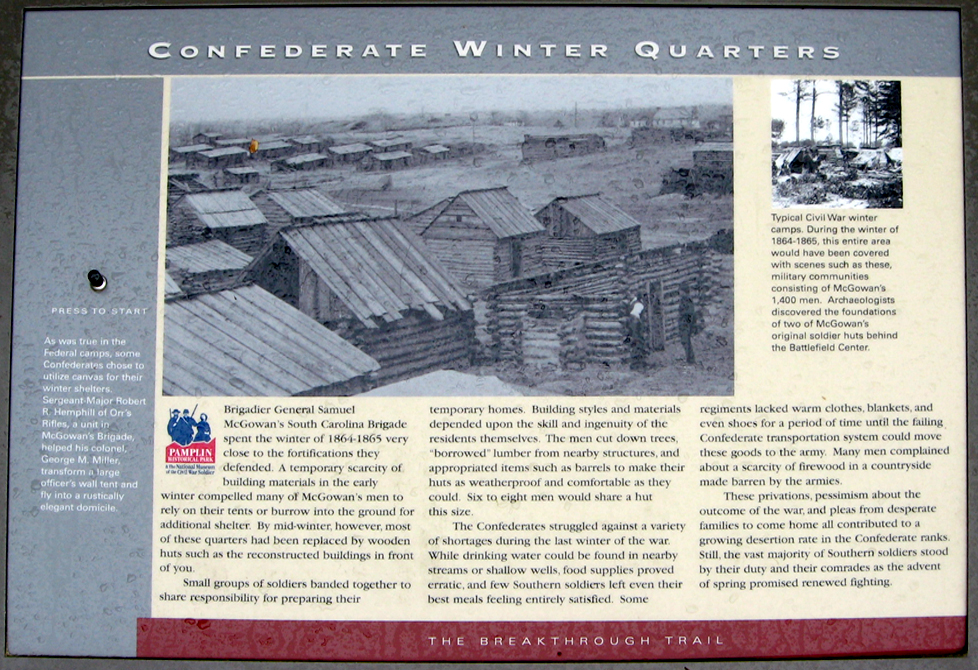
The Confederate Winter Quarters wayside marker is just south of the Battlefield Center at the Military Encampment.
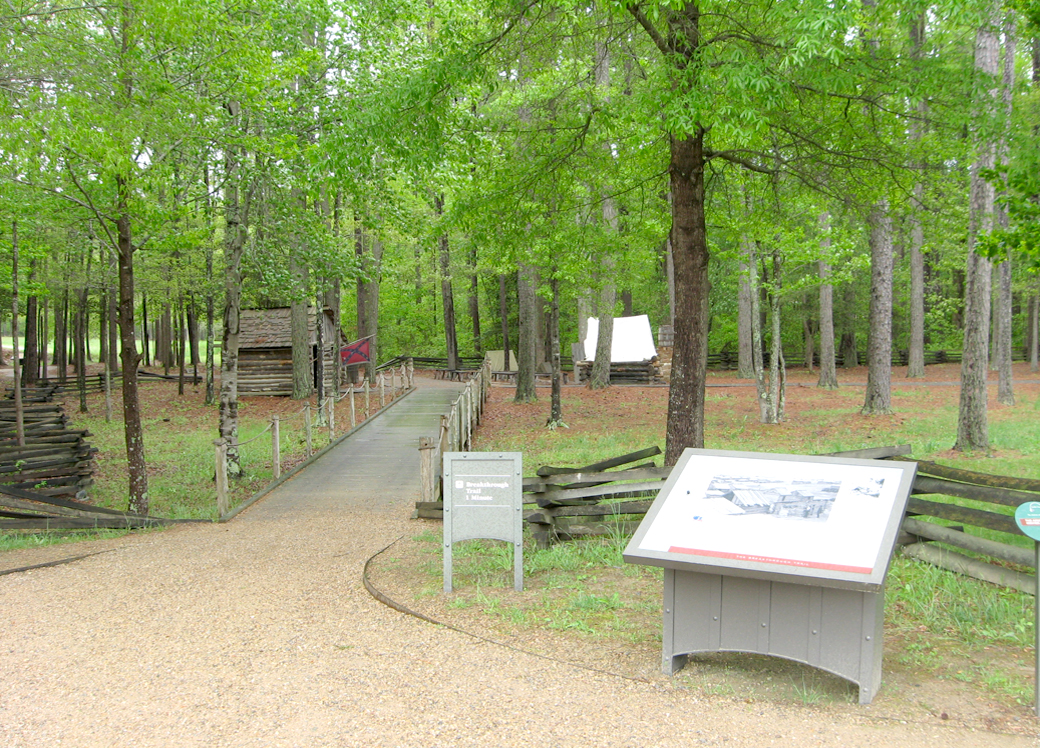
Confederate Winter Quarters
Brigadier General Samuel McGowan’s South Carolina Brigade spent the winter of 1864-1865 very close to the fortifications they defended. A temporary scarcity of building materials in the early winter compelled many of McGowan’s men to rely on their tents or burrow into the ground for additional shelter. By mid-winter, however, most of these quarters had been replaced by wooden huts such as the reconstructed buildings in front of you.
Small groups of soldiers banded together to share responsibility for preparing their temporary homes. Building styles and materials depended upon the skill and ingenuity of the residents themselves. The men cut down trees, “borrowed” lumber from nearby structures, and appropriated items such as barrels to make their huts as comfortable as they could. Six to eight men could share a hut this size.
The Confederates struggled against a variety of shortages during the last winter of the war. While drinking water could be found in nearby streams or shallow wells, food supplies proved erratic, and few Southern soldiers left even their best meals feeling entirely satisfied. Some regiments lacked warm clothes, blankets, and even shoes for a period of time until the failing Confederate transportation system could move these goods to the army. Many men complained about a scarcity of firewood in a countryside made barren by the armies.
These privations, pessimism about the outcome of the war, and pleas from desperate families to come home all contributed to a growing desertion rate in the Confederate ranks. Still, the vast majority of Southern soldiers stood by their duty and their comrades as the advent of spring promised renewed fighting.
Sidebar on the left:
As was true in the Federal camps, some Confederates chose to utilize canvas for their winter quarters. Sergeant Major Robert R. Hemphill of Orr’s Rifles, a unit in McGowan’s Brigade, helped his colonel, George M. Miller, helped his colonel transform a large wall tent and fly into a rustically elegant domicile.
Caption to the Photograph:
Typical Civil War winter camps. During the winter of 1864-1865, this entire area would have been covered with scenes such as these, military communities consisting of McGowan’s 1,400 men. Archaeologists discovered the foundations of two of McGowan’s original soldier huts behind the Battlefield Center.
Location of the marker
The Confederate Winter Quarters wayside marker is at the Wimter Encampmant at Pamplin Historical Park near Petersburg, Virginia. (37° 10.85′ N, 77° 28.529′ W)