
Pamplin Park • Breakthrough Trail • Tudor Hall • Fortifications • Markers • Timeline
Tudor Hall Plantation was a typical Southern plantation before the Civil War. The Manor House itself dates to around 1815. Reconstructed outbuildings around the manor and in the Field Quarter give an idea of how the community, both free and enslaved, lived in the agricultural communities of the American South.
Tudor Hall Manor House
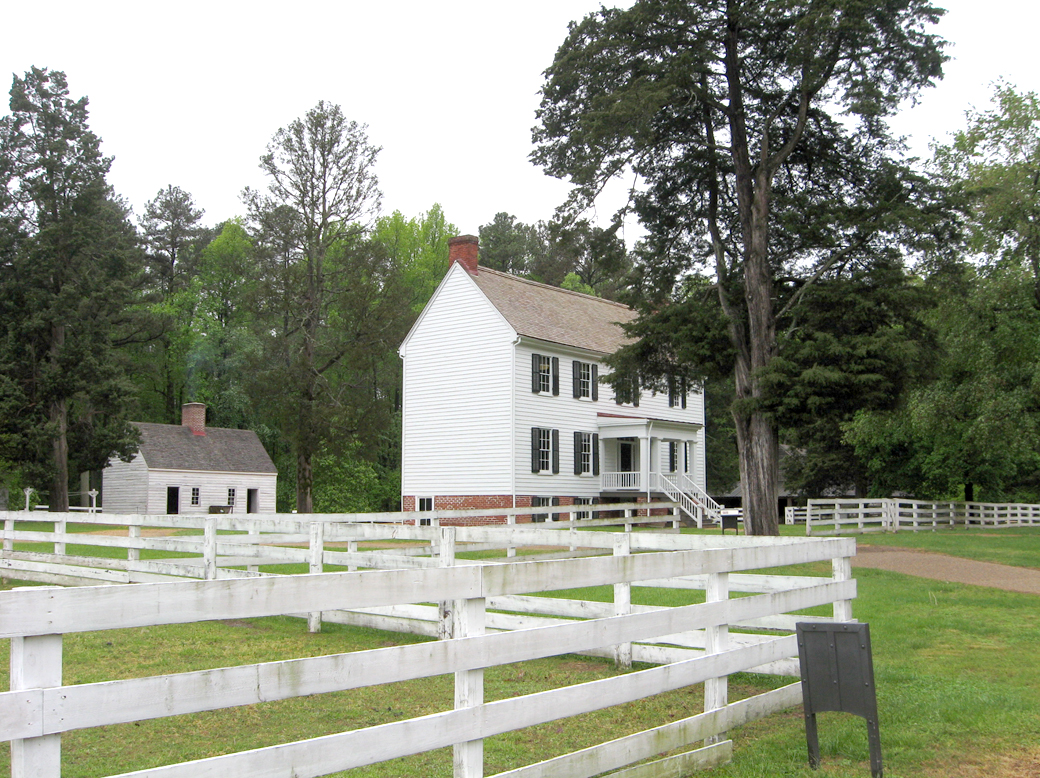
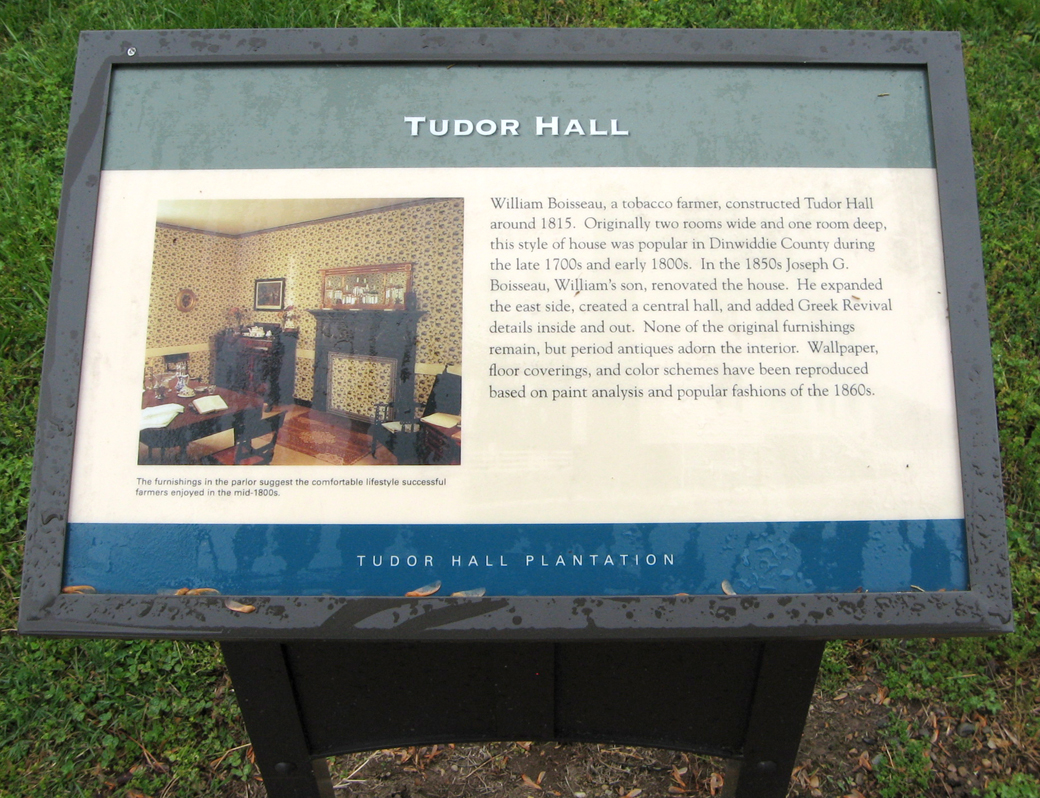
Tudor Hall wayside marker
William Boisseau, a tobacco farmer, constructed Tudor Hall around 1812. Originally two rooms wide and one room deep, this style of house was popular in Dinwiddie County during the late 1700s and early 1800s. In the 1850s Joseph G. Boisseau, William’s son, renovated the house. He expanded the east side, created a central hall, and added Greek Revival details inside and out. None of the original furnishings remain, but period antiques adorn the interior. Wallpaper, floor coverings, and color schemes have been reproduced based on paint analysis and popular fashions of the 1860s.
Caption below the photo
The furnishings in the parlor suggest the comfortable lifestyle successful farmers enjoyed in the mid-1800s.
Outbuildings behind the Manor House
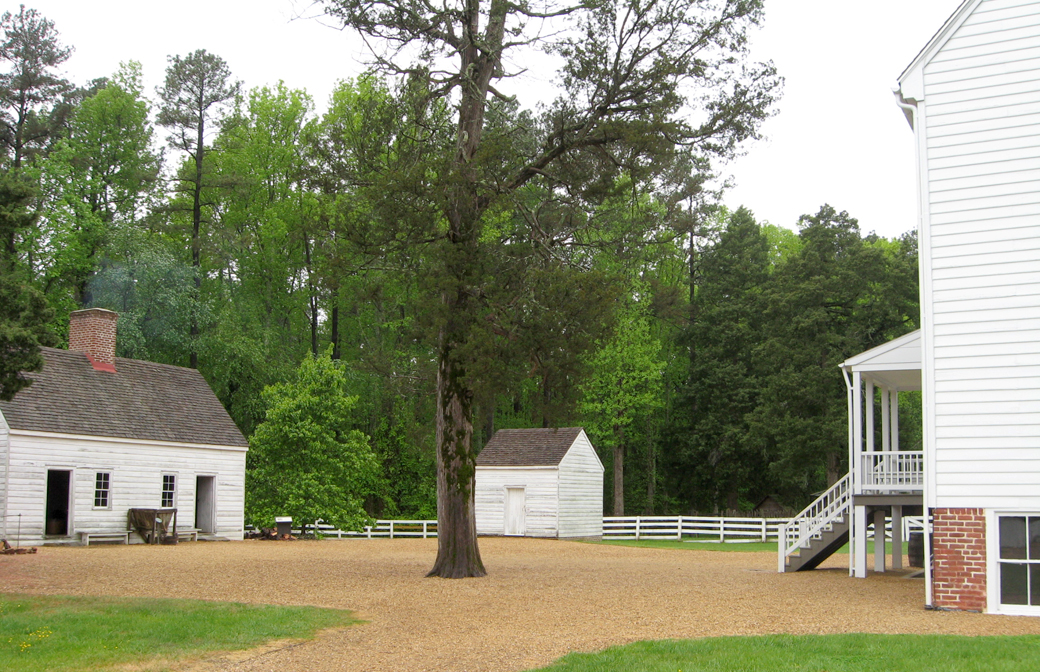
The kitchen for the Manor House was a separate building in the rear, keeping the heat – and the risk of fire – away from the main living quarters.
Field Quarters Outbuildings
The Field Quarters is representative of the part of the plantation where the field workers lived.
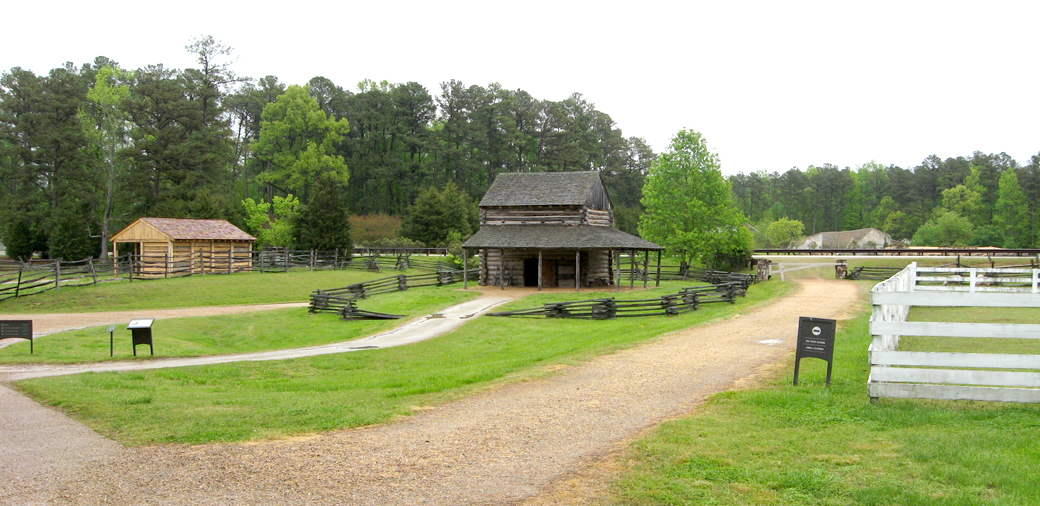
Tudor Hall Field Quarters wayside marker
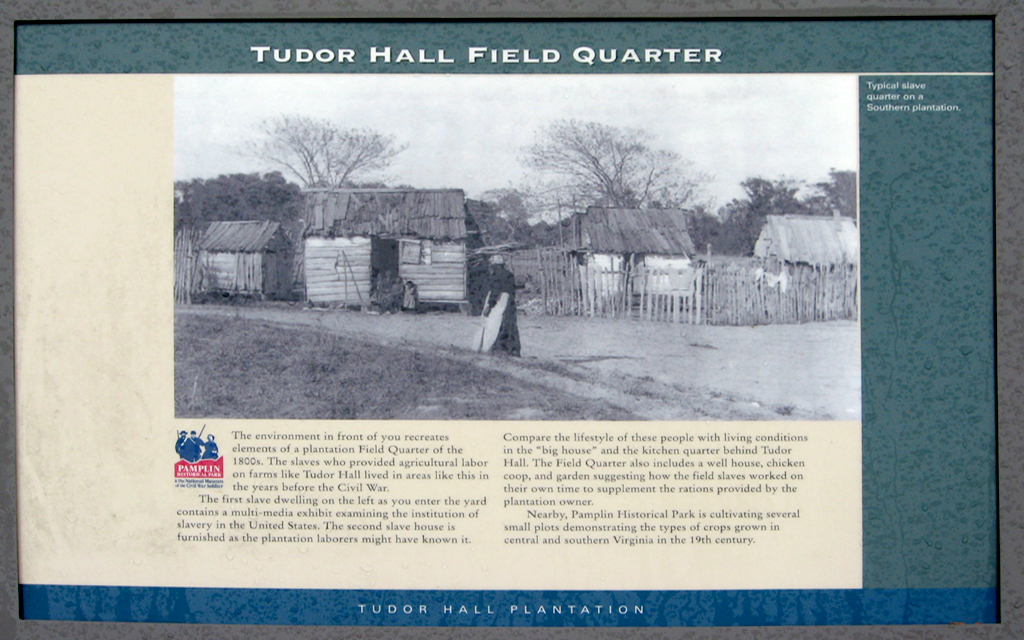
Tudor Hall Field Quarters
The environment in front of you recreates elements of a plantation Field Quarter of the 1800s. The slaves who provided agricultural labor on farms like Tudor Hall lived in areas like this in the years before the Civil War.
The first slave dwelling on the left as you enter the yard contains a multi-media exhibit examining the institution of slavery in the United States. The second slave house is furnished as the plantation laborers might have known it. Compare the lifestyle of these people with living conditions in the “big house” and the kitchen quarter behind Tudor Hall. The Field Quarter also includes a well house, chicken coop, and garden suggesting how the field slaves worked on their own time to supplement the rations provided by the plantation owner.
Nearby, Pamplin Historic Park is cultivating several small plots demonstrating the types of crops grown in central and southern Virginia in the 19th century.
Location of the Tudor Hall Manor House
The Tudor House complex is about 800 feet south of the National Museum of the Civil War Soldier at Pamplin Historical Park. (37.180789, -77.478699)