
Fort Stevens was built in 1861 as part of Major General George McClellan’s plan to completely encircle Washington D.C. with an inpenetrable line of fortresses. He was criticised at the time for wasting time and resources fortifying the side of Washington facing away from the enemy. As it turned out, the only time the Confederates actually attacked the defences it was on the north side, the side “facing away.”
The fort was built on the farm of Elizabeth Proctor Thomas and her siblings, a free black family. They had a house, barn, garden and orchard, all of which was destroyed. Elizabeth applied for compensation for the loss. After fifty years of fighting, she was awarded $1,835 in 1916, the year before she died.
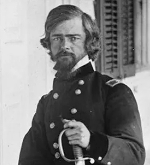 The fort was originally named Fort Massachusetts. But after the September 1, 1862 Battle of Chantilly it was renamed Fort Stevens in honor of Major General Issac Ingalls Stevens (West Point Class of 1839). Stevens was killed at Chantilly leading his division in a charge after seizing the colors from the sixth wounded color bearer to be killed or wounded.
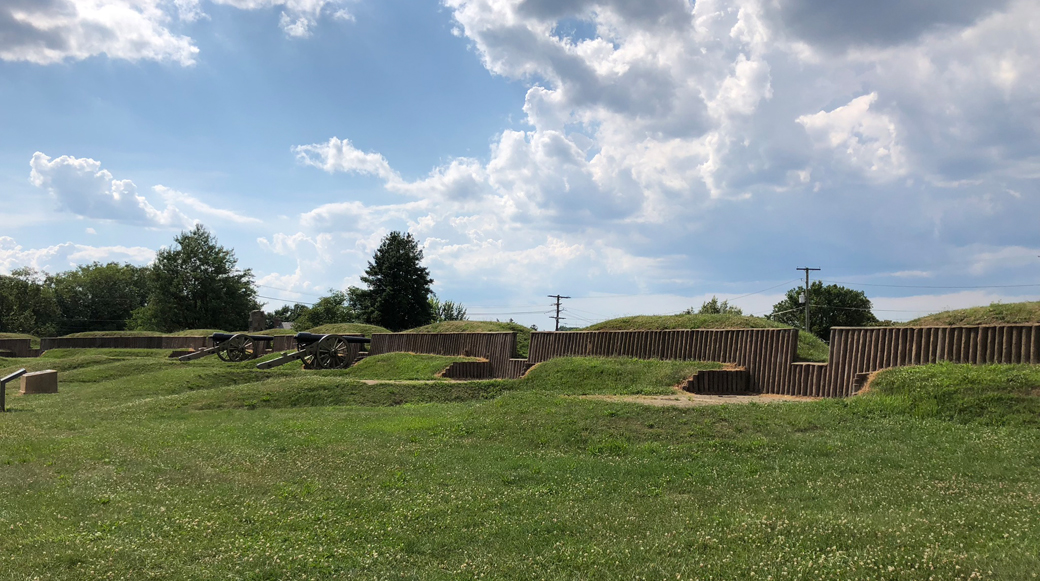
Interior of the fort, showing the gun positions of the north wall.
The fort was constructed of earthen embankments and wood. A tall earthern wall and a ditch faced the enemy, pierced by embrasures for artillery. Troop quarters, storage buildings, and ammunition magazines with thick earthern covers were in the interior.
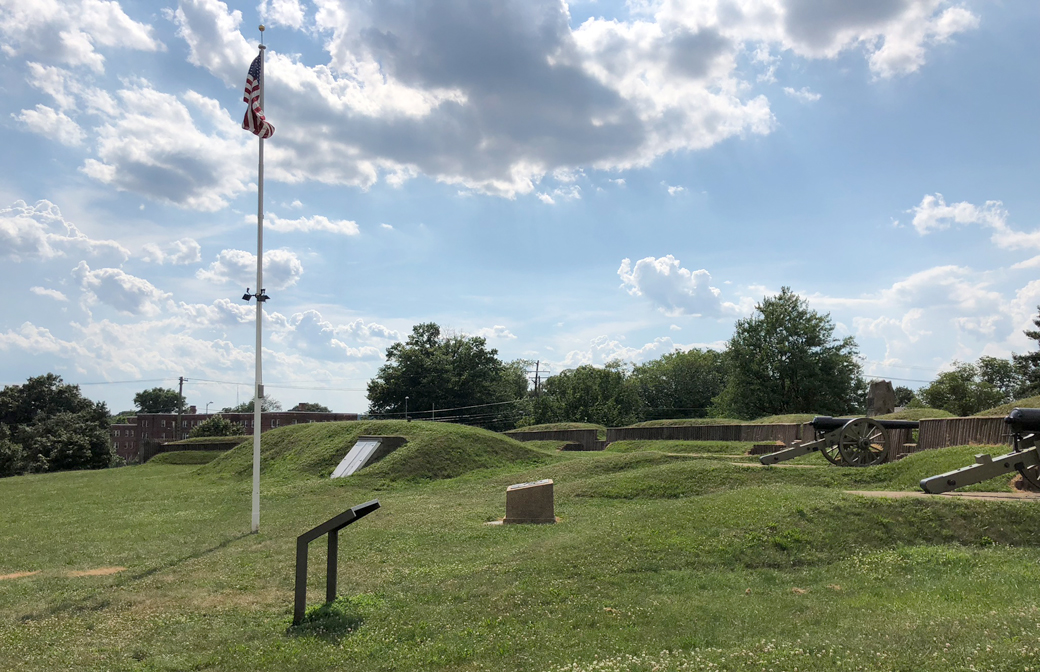
Interior of the fort showing an earth covered ammunition bunker.
The fort had platforms for 9 large artillery pieces. Five faced directly north, two angled off to the northeast and southwest, and one each faced east and west. Smaller embrasures without the large platforms were also located around the fort. (see the Scale Model of Fort Stevens)
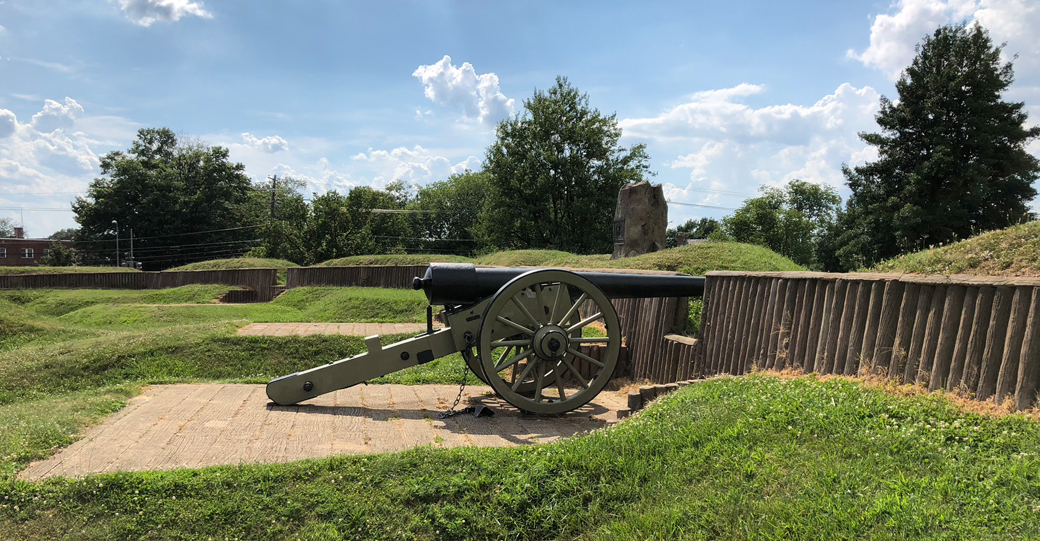
The big siege artillery pieces of the Washington Defences were much larger that the cannon that the armies had with them in the field. The muzzle loading 30 pound Parrott Rifle could throw an artillery shell almost five miles, with an effective combat range of almost three miles.
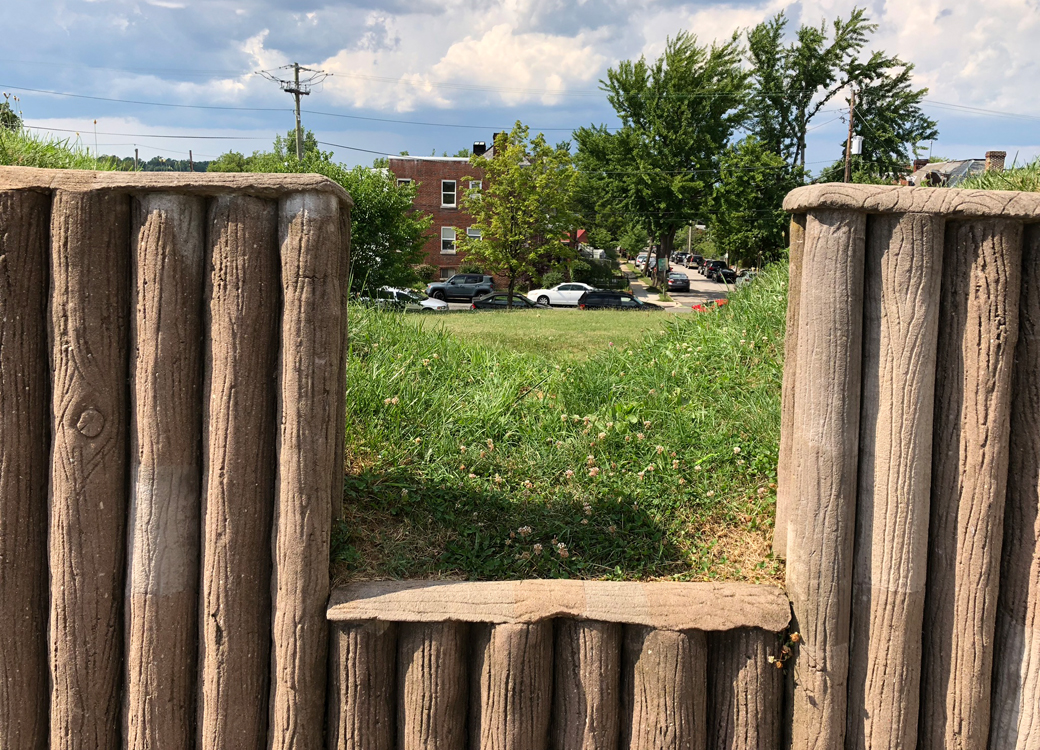
The embrasures allowed artillery crews to work the pieces in relative cover. The crew who had to stand in front of the muzzle to swab and load the piece were the most exposed.
The view out the embrasures of the fort in 1864 was of open fields, much different than today.
Attackers would have to jump down into the ditch before climbing the steep wall of the fort. No Confederate made it this close.
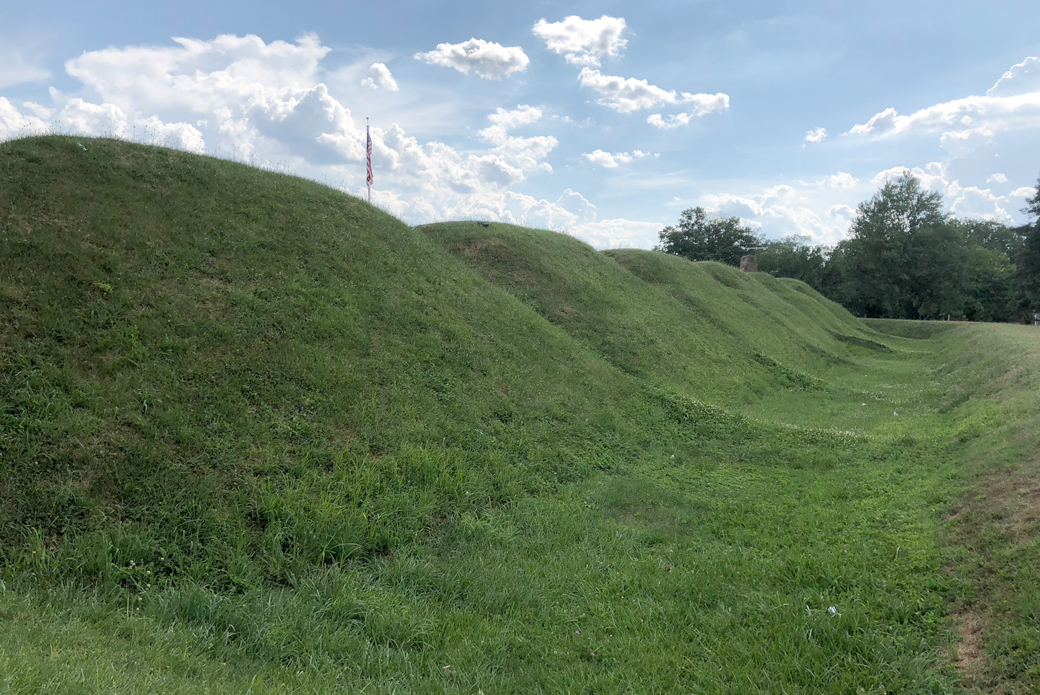
After the war the fort was abandoned. Around 1900 the Fort Stevens Lincoln Memorial Association was formed. They raised money to place a stone memorial on the site on November 7, 1911. (see the Lincoln Under Fire monument) In the 1930s the Civilian Conservation Corps restored the portion of the fort that we can see today.