
Cedar Creek • Tour the Battlefield • Battle Maps • The Armies
The Thoburn’s Refoubt: “Like chaff before the wind” wayside marker is at Stop Two on the Cedar Creek Battlefield auto tour.
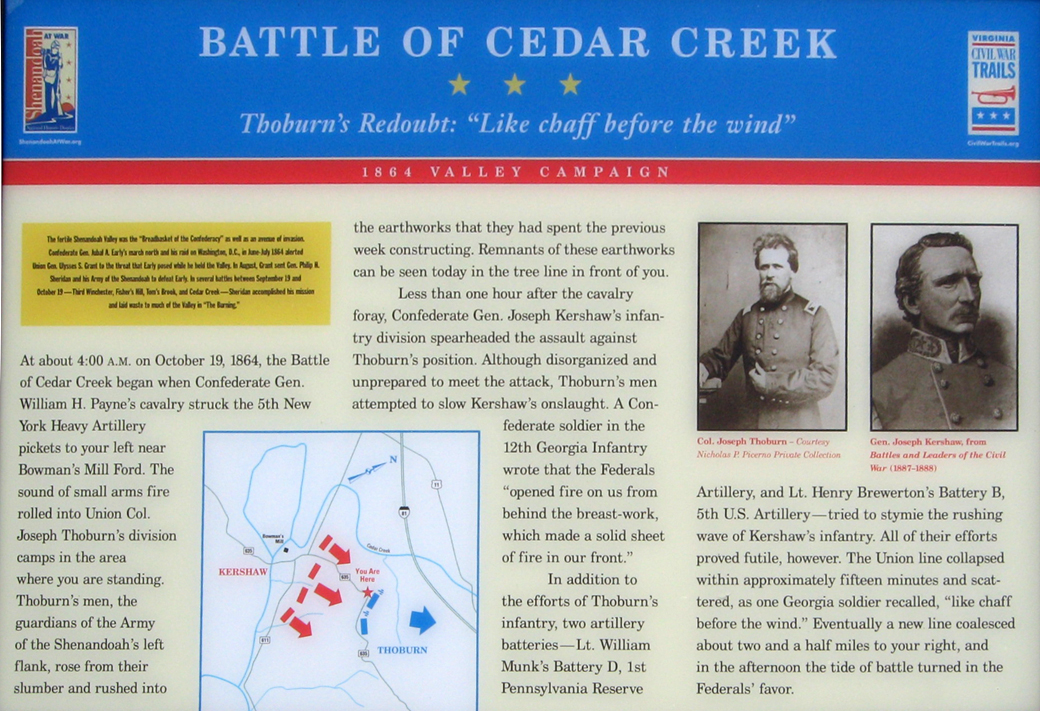
Text from the marker:
Battle of Cedar Creek
Thoburn’s Refoubt: “Like chaff before the wind”
1864 Valley Campaign
At about 4:00 a.m. on October 19, 1864, the Battle of Cedar Creek began when Confederate Gen. William H. Payne’s cavalry struck the 5th New York Heavy Artillery pickets to your left near Bowman’s Mill Ford. The sound of small arms fire rolled into Union Col. Joseph Thoburn’s division camps in the area where you are standing. Thoburn’s men, the guardians of the Army of the Shenandoah’s left flank, rose from their slumber and rushed into the earthworks that they had spent the previous week constructing. Remnants of these earthworks can be seen today in the tree line in front of you.
Less than one hour after the cavalry foray, Confederate Gen. Joseph Kershaw’s infantry division spearheaded the assault against Thoburn’s position. Although disorganized and unprepared to meet the attack, Thoburn’s men attempted to slow Kershaw’s onslaught. A Confederate soldier in the 12th Georgia infantry wrote that the Federals “opened fire on us from behind the breast-work, which made a solid sheet of fire in our front.”
In addition to the efforts of Thoburn’s infantry, two artillery batteries – Lt. William Munk’s Battery D, 1st Pennsylvania Reserve Artillery, and Lt. Henry Brewerton’s Battery B, 5th U.S. Artillery – tried to stymie the rushing wave of Kershaw’s infantry. All of their efforts proved futile, however. The Union line collapsed within approximately fifteen minutes and scattered, as one Georgia soldier recalled, “like chaff before the wind.” Eventually a new line coalesced about two and a half miles to your right, and in the afternoon the tide of battle turned in the Federal’s favor.
From the sidebar on the top left:
The fertile Shenandoah Valley was the “Breadbasket of the Confederacy” as well as an avenue of invasion. Confederate Gen. Jubal A. Early’s march north and his raid on Washington D.C. in June-July 1864 alerted Union Gen. Ulysses S. Grant to the threat that Early posed while he held the Valley. In August, Grant sent Gen. Philip N. Sheridan and his Army of the Shenandoah to defeat Early. In several battles between September 19 and October 19 – Third Winchester, Fisher’s Hill, Tom’s Brook, and Cedar Creek – Sheridan accomplished his mission and laid waste to much of the Valley in “The Burning.”
Captions to the photographs:
Colonel Joseph Thoburn courtesy Nicholas Piserno private collection
Gen. Joseph Kershaw, from Battles and Leaders of the Civil War 1887-1888
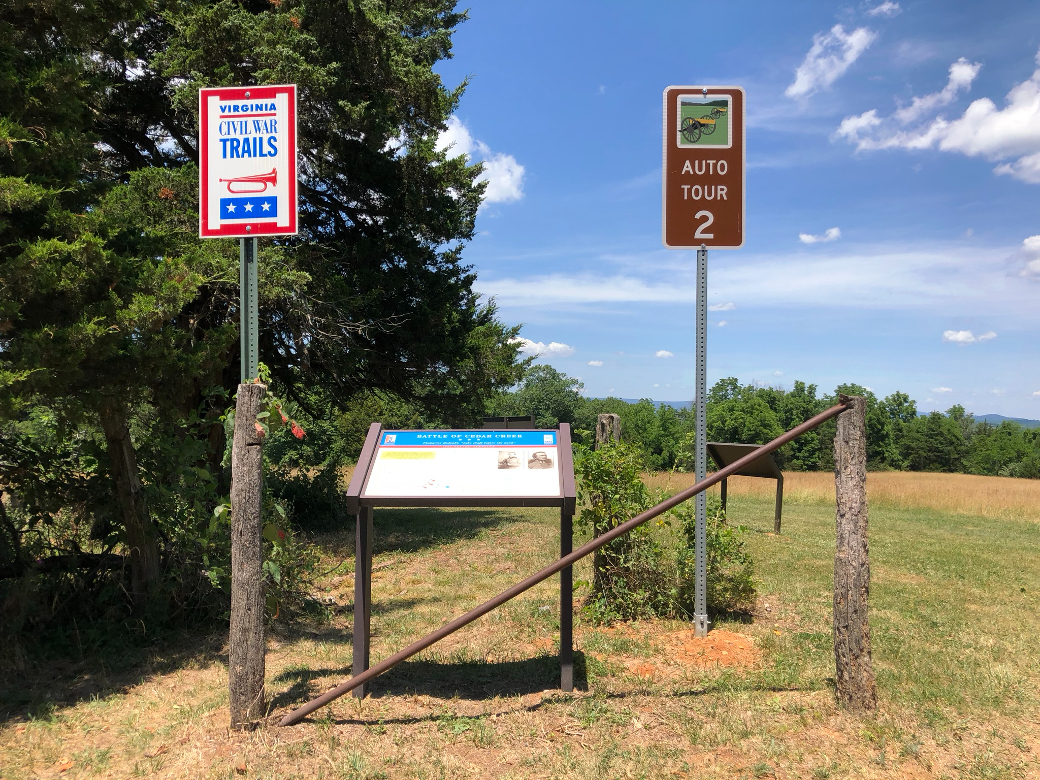
The marker is right next to the parking area at the entrance to the Thobuyrn’s Redoubt field.
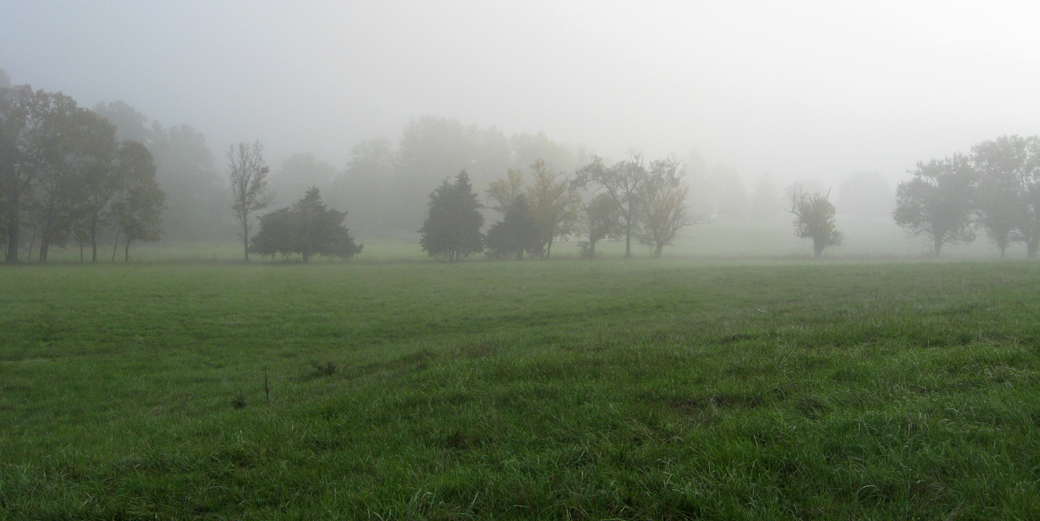
Taken in the early morning on the anniversary of the battle, the heavy fog at the site of the Union camps gives some idea of the weather that helped the Confederates successfully launch their surprise attacks.
Map to Stop Two on the Cedar Creek battlefield tour
The Thoburn’s Refoubt: “Like chaff before the wind” wayside marker is right beside the parking area for Stop Two of the auto tour. (38°59’55.6″N 78°19’10.8″W)