
Petersburg • East • Southeast • West • Monuments • Markers • Facts • Timeline
 The “Infantry Earthworks” wayside marker is at Stop Three on the Petersburg Eastern Front Auto tour.
The original marker has been updated with slightly different text and images. The original version if included here for historical reference.
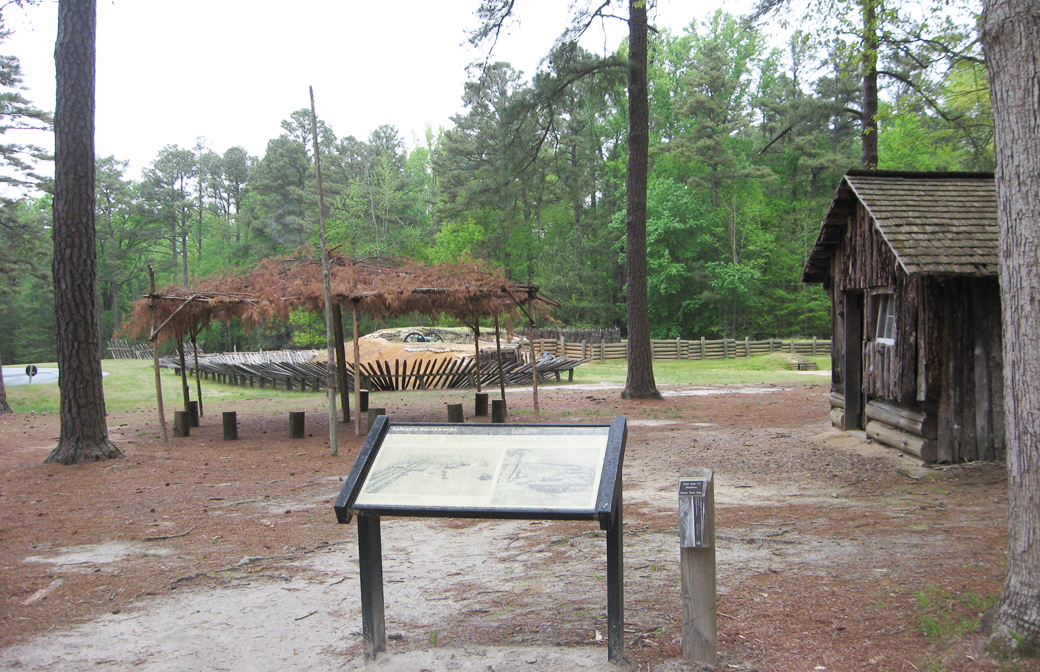
The marker looks out across recreations of camp buildings and field fortifications
Text from the current marker:
Infantry Earthworks
Re-created here are samples of some of the infantry earthworks that ringed Petersburg – works that one man said made the landscape resemble “an immense prairie dog village.” As the siege wore on, assaults against entrenched positions became rare. Most of the pitched battles at Petersburg took place beyond the flanks of the armies, as the Federals inexorably pushed westward to cut the rail lines and roads into the city.
“Attacking entrenchments has been tried so often and with such fearful losses that even the stupidest private now knows that it cannot succeed, and the natural consequence follows; the men will not try it. The very sight of a bank of earth brings them to a dead halt.”
– Col. Charles Wainwright, USA, June 18, 1864
Text from the original marker:
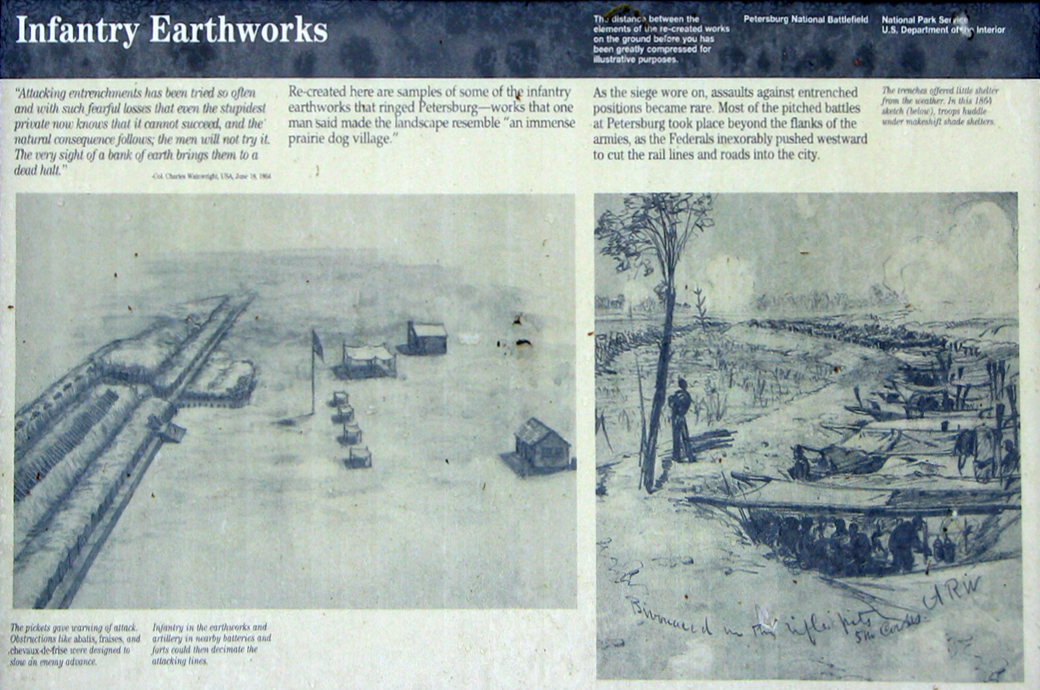
Infantry Earthworks
“Attacking entrenchments has been tried so often and with such fearful losses that even the stupidest private now knows that it cannot succeed, and the natural consequence follows; the men will not try it. The very sight of a bank of earth brings them to a dead halt.”
– Col. Charles Wainwright, USA, June 18, 1864
Re-created here are samples of some of the infantry earthworks that ringed Petersburg – works that one man said made the landscape resemble “an immense prairie dog village.”
As the siege wore on, assaults against entrenched positions became rare. Most of the pitched battles at Petersburg took place beyond the flanks of the armies, as the Federals inexorably pushed westward to cut the rail lines and roads into the city.
Caption to the drawing at right:
The trenches offered little shelter from the weather. In this 1864 sketch (below), troops huddle under makeshift shade shelters.
Caption to the drawing at left:
The pickets gave warning of attack. Obstructions like abatis, fraises, and chevaux-de-frise were designed to slow an enemy advance. Infantry in the earthworks and artillery in nearby batteries and forts could then decimate the attacking lines.
Location of the marker
The “Infantry Earthworks” wayside marker is on the north end of the parking area looking toward the camp and fortification displays.